Photon Computing: "The Lightning Fast"
- Technology , Computing , Future tech
- October 10, 2018
Following is a little article I wrote up back in 2018 for my college magazine. I was 16/17 and stupid, today kids are busy raising millions for startup but I was just figuring out coding, ego-fighting with friends and trying to get a girl out of pure FOMO and status back in college.
So yeah this blog has a lot of grammar mistakes, but I intend to keep it as is because it would be fun to read this later and hey in todays world where everything is heavily moderated using AI tools, its good to have some raw unedited content too. hehe.
Traditional Computing
Today traditional computers use electron as its transfer medium. The top speed that could be achieved from an over clocked CPU was 8.5 GHz. That was achieved by an AMD Bulldozer CPU.
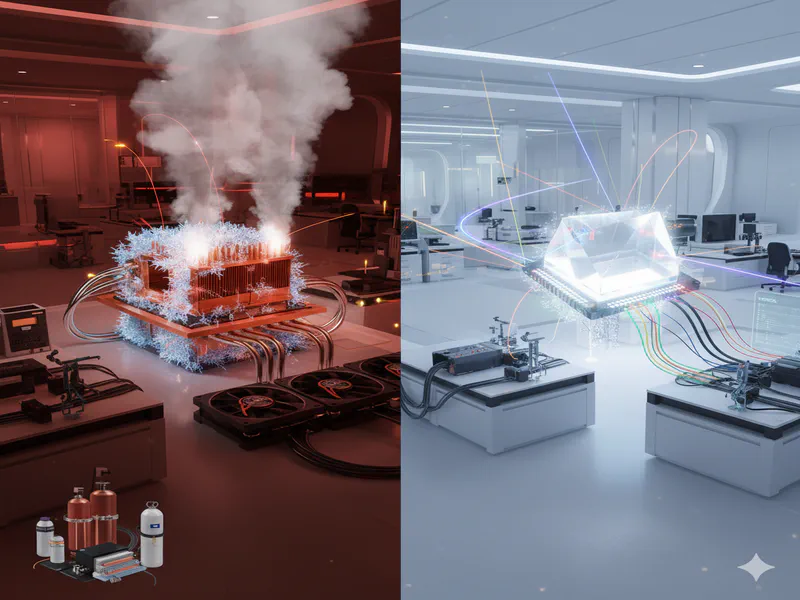
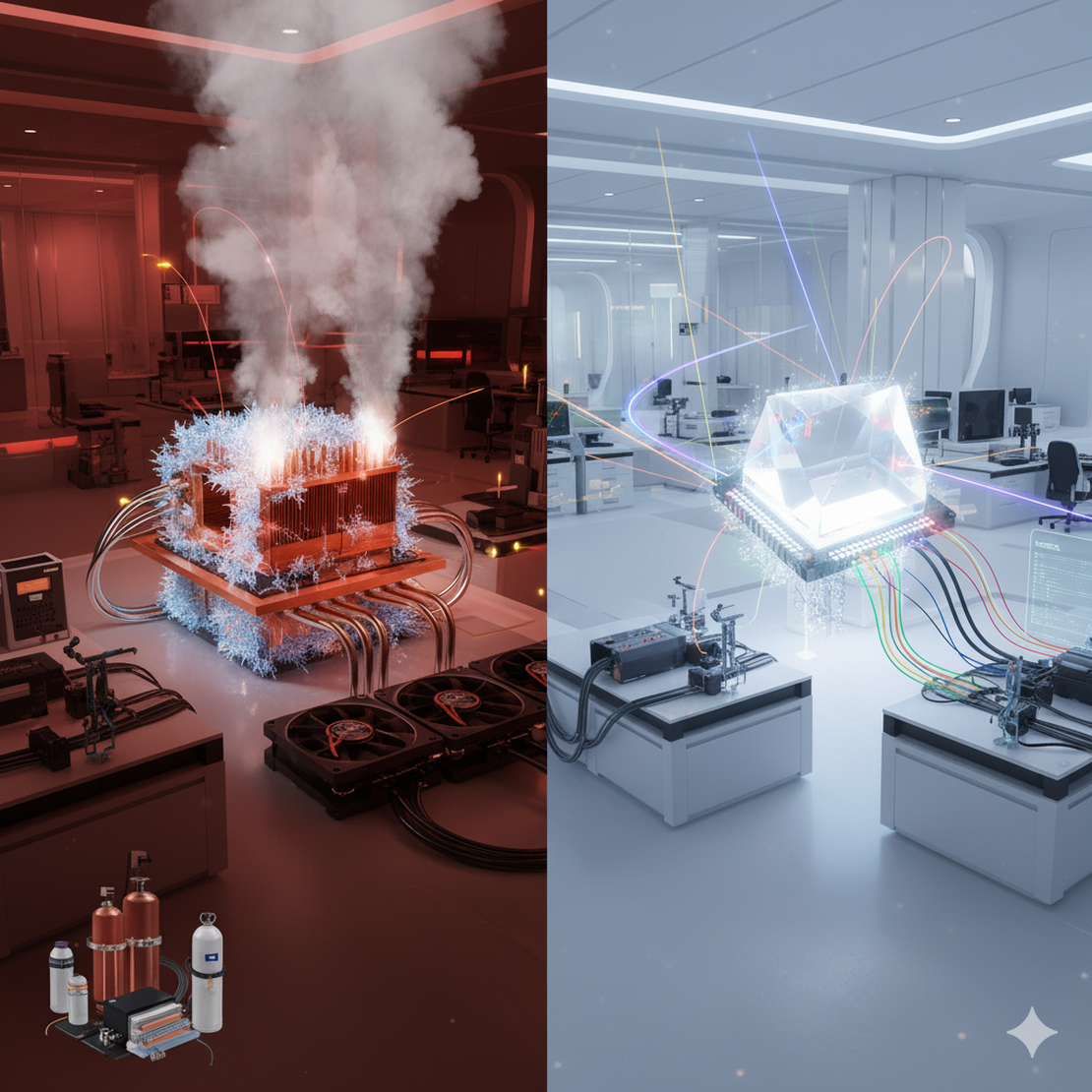
To achieve such speeds, we have to bring down those burning hot CPU temperatures to sub-zero conditions. Here to reach such 8.5GHz speeds they had to continually pour LN2 or Liquid Nitrogen or simply Nitro on top of our CPU. So much energy and resources are needed to do something that epic.
But just to bring down temperatures there many other different methods like Water cooling, dual phase cooling, turbocharged cooling and one interesting method is to dip the whole motherboard into the liquid, in fact a special liquid called novec by m3 or mineral oil these liquids have nearly ZERO electro conductivity and high boiling point.
Optical/Photonic Computing
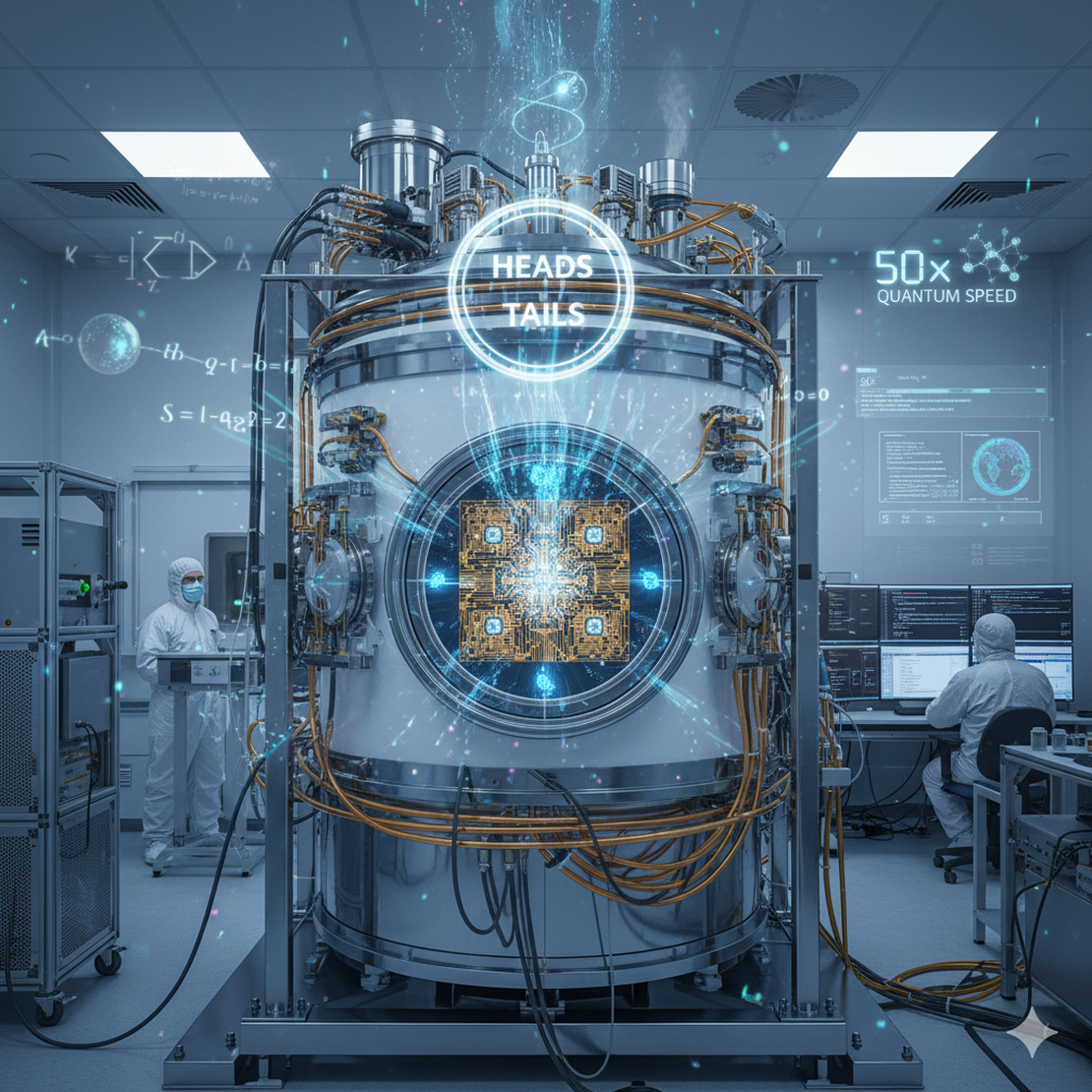
Photon / Photonic / Optical computing are all same terms. In a photon computing instead of electron used by the traditional computing a photon is used. The advantages of using a photon as a medium of data is that when electron travel at high speeds through a medium, heat is generated and there also occurs electron loss over a long distance. Now when photon travels at higher speeds than electron and they won’t create any heat while traveling at high speeds. Photons are nearly 10 x faster than electrons. Like traditional computing got their own type of logic gates that can only process electron bits, photon computing got its own type of optical logic gates and circuits.
Major Challenges
Using photon instead of electron is really challenging. Till today scientists could not create a CPU capable enough to process information coming in this light speed. There is no CPU today which can directly process light. That’s why we have to convert the information in photon form to electron form so that the electron-based CPU can process it. So, we could be using light for long distance data transfer. The scientist also had to bring down the speed of light, so that we could process it. To do so they had to send some photons in reverse direction so that the photons coming in light speed could just crash with the photons coming from the opposite direction, these photons coming from opposite side acts as a resistance for the medium. And then using a Photon to Electron converter near to the CPU won’t be really efficient anyway.
Just give a thought to the future computing
What if we could have a laptop that was as thin as today’s MacBook Air, with a performance like a gaming server, this could be a reality with photon computers. Imagine a phone with a clock speed of more than 10 GHz with no heating issues even while all day gaming, and this phone could last for some days even with continues 4K 144hz gaming. That’s super awesome right!
[Alphons Jaimon - 2018]